
Collector's Challenge
Alocasia 'Polly'
Scientific Name
Alocasia × amazonica 'Polly'
Family
Araceae
Native Region
Cultivated hybrid (Florida)
Growth Rate
Moderate
Origin + Story
Naming note. A hybrid, not a wild species. The 'amazonica' name is misleading; despite it, this plant does not grow in the Amazon. It was created in a Florida nursery in the 1950s by crossing two Southeast Asian Alocasias. Also sold under 'African Mask Plant,' which is equally geographically inaccurate.
A cultivated hybrid, first developed in Florida by crossing Alocasia longiloba and Alocasia sanderiana, both native to Southeast Asia. Despite the trade name suggesting Amazonian or African origins, the plant has no connection to either continent.
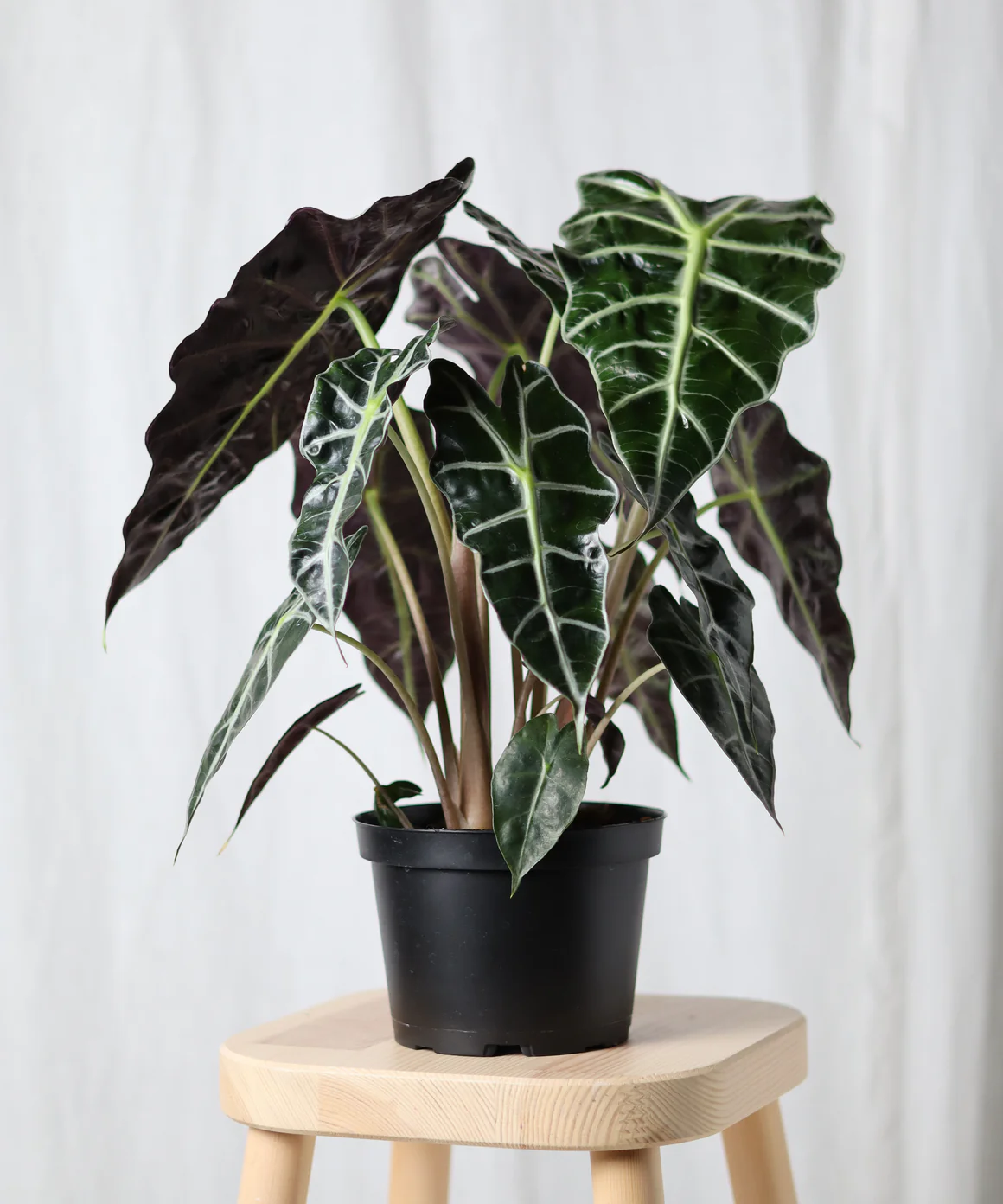
Arrow-shaped, glossy leaves in deep green with striking silver-white veining that gives the plant its dramatic, almost graphic appearance. Compact and upright.
Grows well with small dark planters, humidifiers, bright bathrooms, and collectors ready to work with a plant that has clear preferences.
Care guide
Light: Bright indirect light. No direct sun.
Water: When the top inch is dry.
Humidity: 60% and up.
Temperature: 65 to 80°F.
Soil: Chunky, fast-draining. Bark and perlite heavy.
Growth Rate: Moderate.
Detailed care
Light
Bright, indirect. Direct sun scorches the leaves.
Water
Top inch dry, then water. Alocasias are unforgiving of overwatering.
Humidity
60% or higher. Household humidity often is not enough. Add a humidifier.
Soil
Chunky, fast-draining. Bark and perlite heavy.
Feeding
Light monthly feeding during the growing season.
Dormancy
Alocasias often drop leaves in winter. The corm is likely fine. Reduce watering and wait.
Common Issues
Crispy leaf edges: Low humidity, almost always.
Yellowing leaves: Overwatering or dormancy.
Sudden leaf drop: Stress. Could be a move, a draft, or seasonal change.
Never recovering from repotting: Alocasias hate root disturbance. Repot only when necessary.
Grows well with
Plants that share a trait: same family, similar care, or complementary aesthetics.