Collector's Challenge
Alocasia 'Silver Dragon'
Scientific Name
Alocasia baginda 'Silver Dragon'
Family
Araceae
Native Region
Borneo
Growth Rate
Slow
Origin + Story
Naming note. A cultivar of Alocasia baginda, closely related to Alocasia 'Dragon Scale.' Silver Dragon has a paler, more silvered leaf; Dragon Scale is deeper green with more pronounced texture. Same species, different expressions.
Native to the limestone cliffs and forest floors of Borneo. The species evolved in humid, dappled-light conditions, which is why it holds high humidity as a non-negotiable indoors.
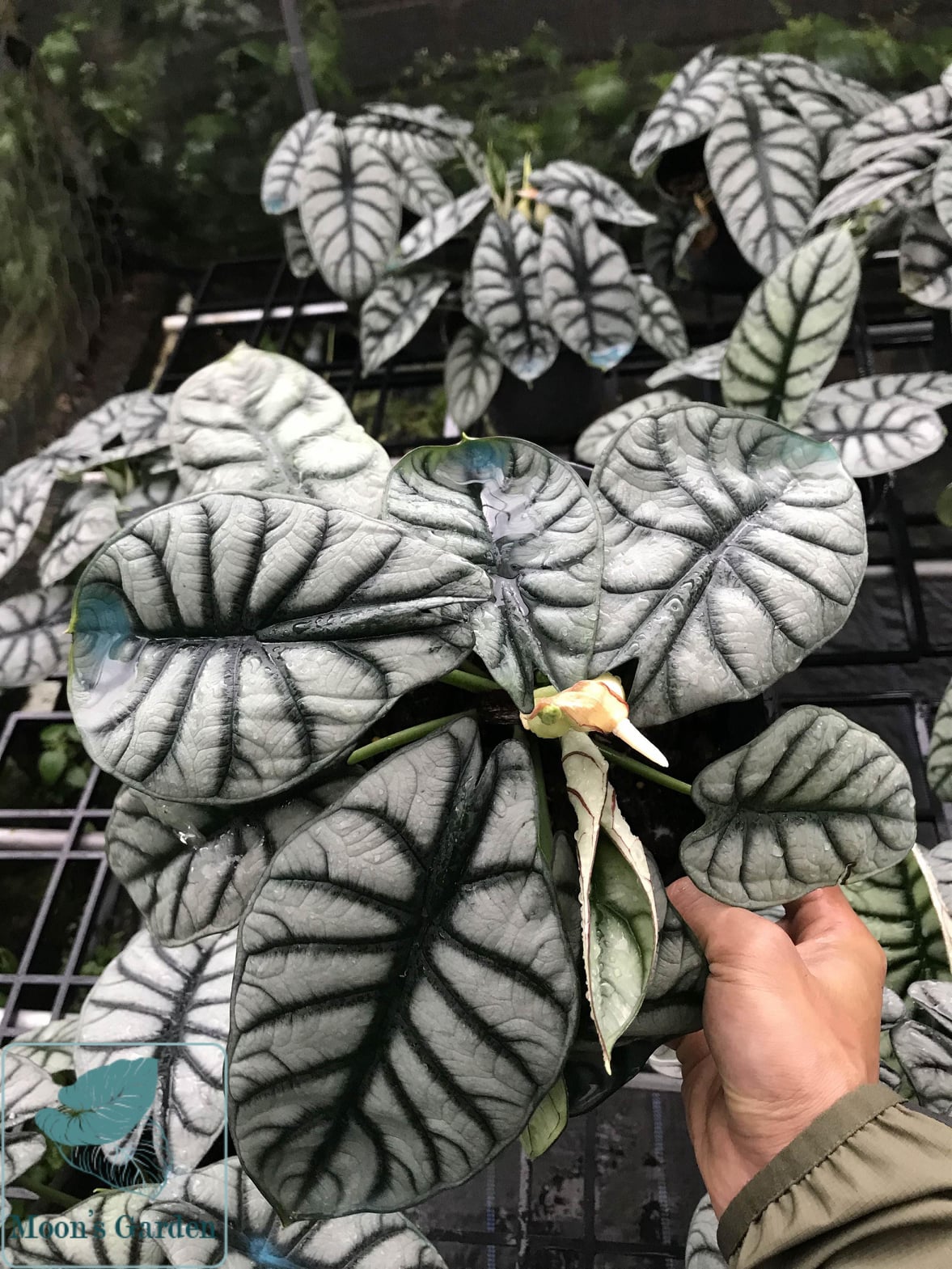
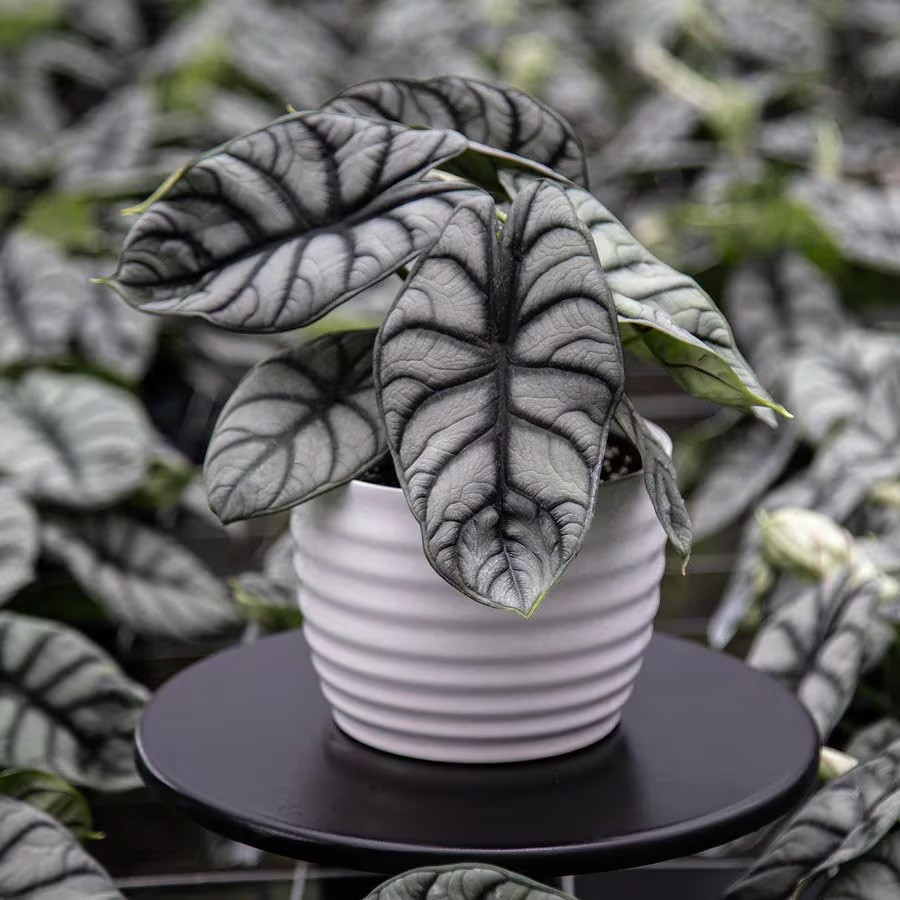
Small, thick, shield-shaped leaves in a chalky silver-green with deeply etched veins that give the surface a scaled, almost reptilian texture. Compact, sculptural, and slow to grow, which is part of the appeal.
Grows well with small terracotta pots, humidifiers, glass cabinets or grow tents, and collectors comfortable with a plant that has opinions.
Care guide
Light: Bright indirect light.
Water: When the top inch of soil is dry.
Humidity: 60% and up.
Temperature: 65 to 80°F.
Soil: Chunky, fast-draining. Bark, perlite, coco coir, and a small amount of soil.
Growth Rate: Slow.
Detailed care
Light
Bright, indirect. No direct sun.
Water
Top inch dry, then water. Alocasias are more sensitive to overwatering than most aroids.
Humidity
60% or higher. This is where most Alocasia care goes wrong.
Soil
Chunky, fast-draining. Bark, perlite, coco coir, and a small amount of soil.
Feeding
Light monthly feeding during the growing season.
Dormancy
Alocasias can drop most or all leaves in winter or when stressed. The corm is often still alive. Reduce watering, wait for spring.
Common Issues
Yellowing leaves: Overwatering, low humidity, or the plant entering dormancy.
Crispy edges: Low humidity, almost always.
Losing leaves in winter: Often dormancy, not death. Check the corm before giving up.
Root or corm rot: The most common way to lose this plant. Drainage matters.
Grows well with
Plants that share a trait: same family, similar care, or complementary aesthetics.