Collector's Challenge
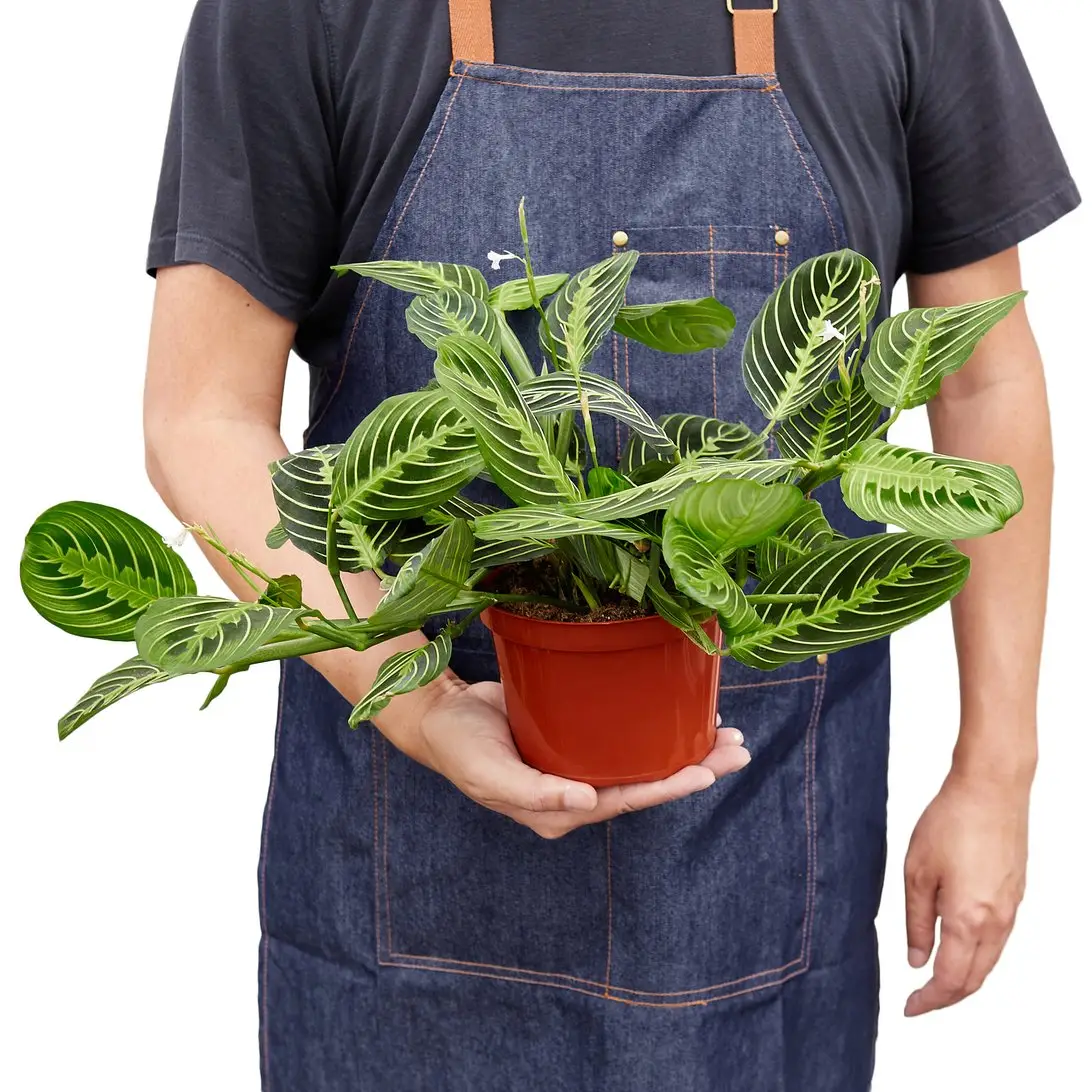
Calathea Maranta Lemon Lime
Scientific Name
Maranta leuconeura
Family
Marantaceae
Native Region
Brazilian tropical rainforests
Growth Rate
Moderate
Origin + Story
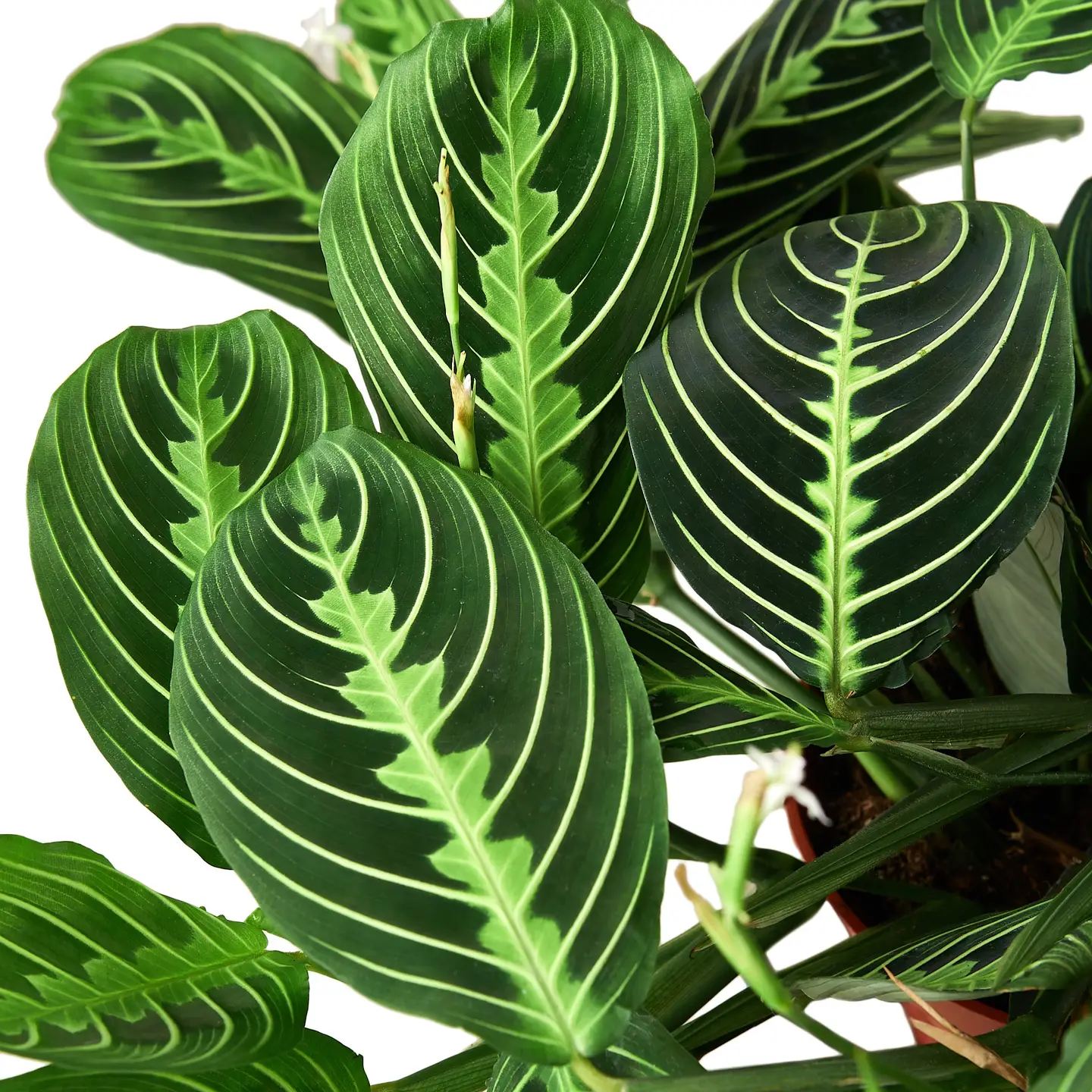
Calathea Maranta leuconeura is native to the tropical rainforests of Brazil, where it grows as a low, spreading ground cover on the forest floor. The species was named after Bartolomeo Maranta, a 16th-century Italian physician and botanist. The variety name erythroneura means "red-veined," which describes the parent form (the classic Red Prayer Plant with its prominent red veining). The 'Lemon Lime' cultivar is a selected form with a different color expression: the bold veins that run herringbone-style from the central midrib are a vivid lime green against a deeper green leaf background, with lighter chartreuse patches between the veins.
Marantas are commonly called prayer plants because of their pronounced nyctinastic movement: the leaves fold upward at night, resembling hands pressed together in prayer, and unfold flat during the day. This movement is driven by changes in water pressure within a structure called the pulvinus, a swollen joint at the base of each leaf. The movement is triggered by light changes and follows a roughly circadian rhythm. In a quiet room at dusk, you can watch the leaves slowly rise over the course of an hour. It is one of the most visible and tangible demonstrations of plant behavior available in a houseplant.The Lemon Lime cultivar is frequently confused with Calathea species (now reclassified as Goeppertia), and you will often see it sold as "Calathea Lemon Lime." While Maranta and Calathea are related (both Marantaceae), they are different genera with different growth habits. Marantas tend to grow low and spread horizontally with trailing or creeping stems, while most Calatheas grow upright from a central clump. Marantas are generally a bit more forgiving than Calatheas, making the Lemon Lime a good entry point for someone interested in the prayer plant family.
Care guide
Light: Medium to bright indirect. No direct sun.
Water: Keep soil consistently moist but not waterlogged. Use filtered or distilled water.
Humidity: Prefers 50-60%+. Struggles below 40%.
Temperature: 65-80°F. Sensitive to cold drafts and temps below 60°F.
Soil: Tropical mix: 2 parts peat or coco coir, 1 part perlite, small amount of compost.
Toxicity: Non-toxic to cats and dogs.
Growth Rate: Moderate. Spreads laterally rather than growing tall.
Detailed care
Light
Medium to bright indirect light. In its native habitat, this plant grows under dense canopy cover and never receives direct sunlight. Direct sun will fade the vivid lemon-lime veining and can scorch the thin leaves. Too little light slows growth and can cause the leaf colors to dull, with the contrast between the veins and the surrounding green becoming less pronounced. An east-facing window is ideal. A north-facing window works if the plant is close to the glass. South or west windows need sheer curtains or placement a few feet back from the glass.
Watering
Keep the soil consistently moist but never soggy. Water when the top half inch to one inch of soil begins to feel dry. Marantas do not like to fully dry out between waterings; extended dry periods will cause leaf edges to brown and curl. However, waterlogged soil will cause root rot just as with any plant. The balance is moist, not wet.
Water quality matters. Like its Calathea relatives, Maranta leuconeura is sensitive to the fluoride, chlorine, and mineral salts found in most tap water. These chemicals accumulate in the soil and damage leaf tips and edges over time. Use filtered water, distilled water, or rainwater for best results. If using tap water, let it sit out overnight to allow some chlorine to dissipate, though this does not remove fluoride.
Humidity
Prefers 50-60% humidity or higher. Average home humidity (30-50%) is workable, especially in warmer months, but the plant will show its appreciation for higher moisture with more vibrant color and fewer crispy edges. In winter, when heating systems dry the air, a humidifier in the same room makes the biggest difference. Pebble trays provide a small boost. Grouping the Maranta with other humidity-loving plants creates a microclimate that benefits all of them.
Misting is popular with prayer plant owners, and while it provides momentary moisture on the leaf surface, it does not meaningfully raise ambient humidity. It is not harmful (as long as you do not overdo it and create conditions for fungal issues), but it is not a substitute for actual humidity.
Feeding
Feed every two weeks during the growing season (spring through early fall) with a balanced liquid fertilizer diluted to half strength. Marantas are moderate feeders and respond well to consistent, gentle nutrition. The Lemon Lime cultivar benefits from regular feeding to maintain the vivid color contrast in the leaves. Reduce to monthly in early fall and stop entirely from November through February. Flush the soil with plain water every couple of months to prevent salt buildup.
Repotting
Repot every one to two years in spring, or when the plant becomes visibly rootbound. Marantas have relatively shallow root systems and do best in wider, shallower pots rather than deep ones. Go up one size. Use a tropical mix that retains moisture without staying waterlogged: two parts peat or coco coir, one part perlite, and a small amount of compost or worm castings.
Propagation
Marantas are easy to propagate compared to Calatheas. Take stem cuttings just below a node, ensuring the cutting has at least one leaf and one node. Place in water and roots will develop within one to three weeks. Pot in moist soil once roots are an inch or two long. You can also divide the plant at the roots during repotting, separating clumps that have their own stems and root systems. Division and cuttings both work well, giving you options that Calathea growers do not have.
Common Issues
Brown, crispy leaf tips and edges: The most common complaint. Usually caused by low humidity, tap water minerals, or both. Increase humidity and switch to filtered water. The damaged tips will not heal, but new growth will come in clean.
Leaf curling: Underwatering, cold drafts, or low humidity. Check soil moisture first, then assess the plant's environment for temperature or humidity issues.
Fading vein color: Insufficient light. The lemon-lime contrast depends on adequate brightness. Move to a brighter indirect spot.
Yellowing leaves: Overwatering if the soil is wet, or natural aging if it is a single lower leaf. Check soil moisture and drainage.
Leaves not folding at night: This can happen if the plant is under artificial light that stays on past natural sundown. The nyctinastic movement is triggered by light changes. If the plant is in a room with lights on until midnight, the cycle may be disrupted. It is not harmful, but if you want to see the movement, let the plant experience natural light transitions.
Spider mites: Common in dry conditions, especially winter. Check leaf undersides for fine webbing and tiny moving dots. Increase humidity and treat with insecticidal soap or neem oil. Regular misting of the leaf undersides can help as a preventive measure since spider mites prefer dry environments.
Grows well with
Plants that share a trait: same family, similar care, or complementary aesthetics.