Collector's Challenge
Calathea Maranta Red Prayer
Scientific Name
Goeppertia warszewiczii
Family
Marantaceae
Native Region
Costa Rica and Nicaragua
Growth Rate
Moderate
Origin + Story
Calathea warscewiczii is native to the humid tropical forests of Costa Rica and Nicaragua, where it grows as an understory plant beneath the dense canopy. It was named after the Polish botanist Jozef Warszewicz, who extensively collected plant specimens across Central America in the mid-1800s.
In its natural habitat, this plant never sees direct sunlight. It lives in consistent warmth, high humidity, and dappled filtered light on the forest floor. Every care preference it has in your home traces back to those conditions.
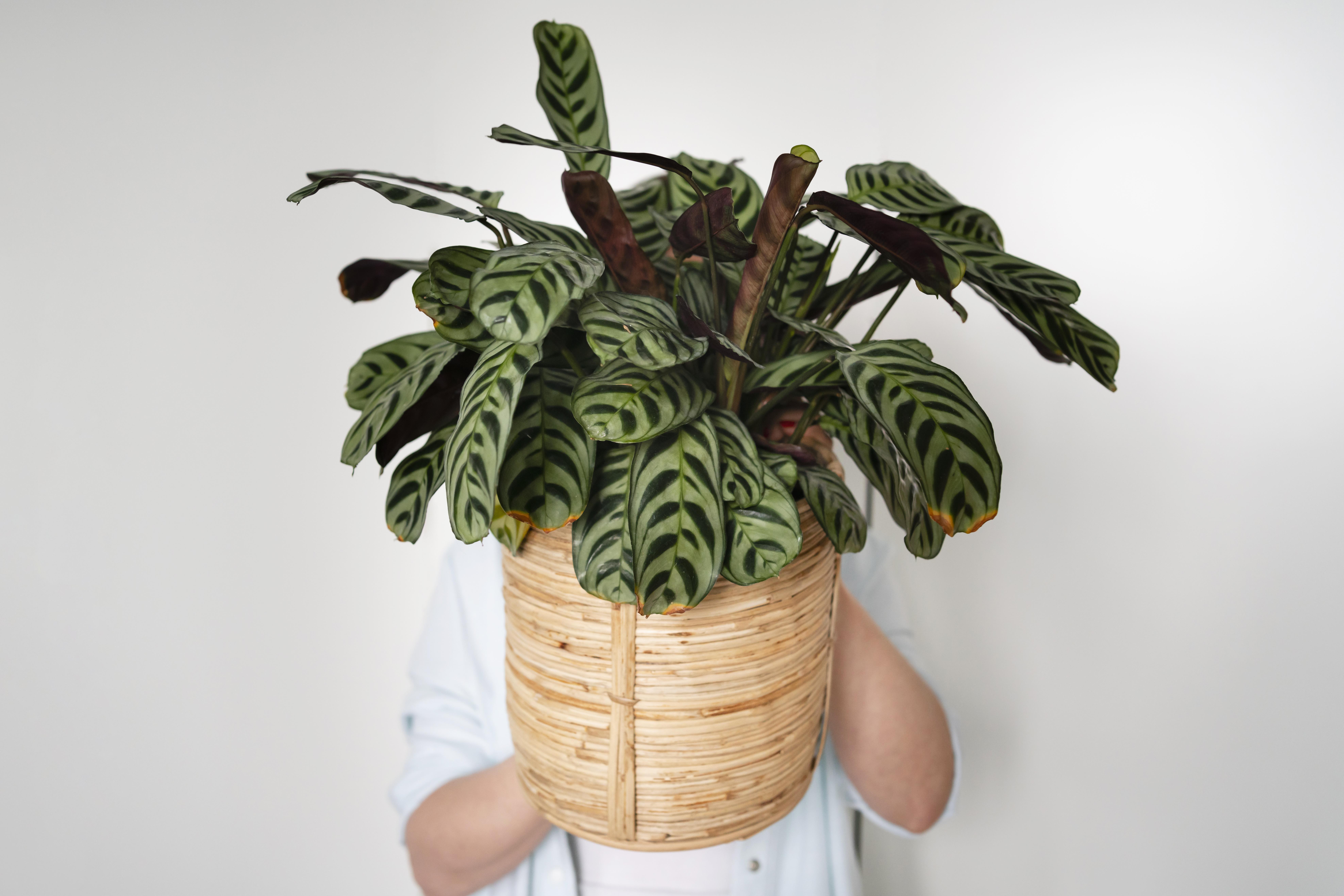
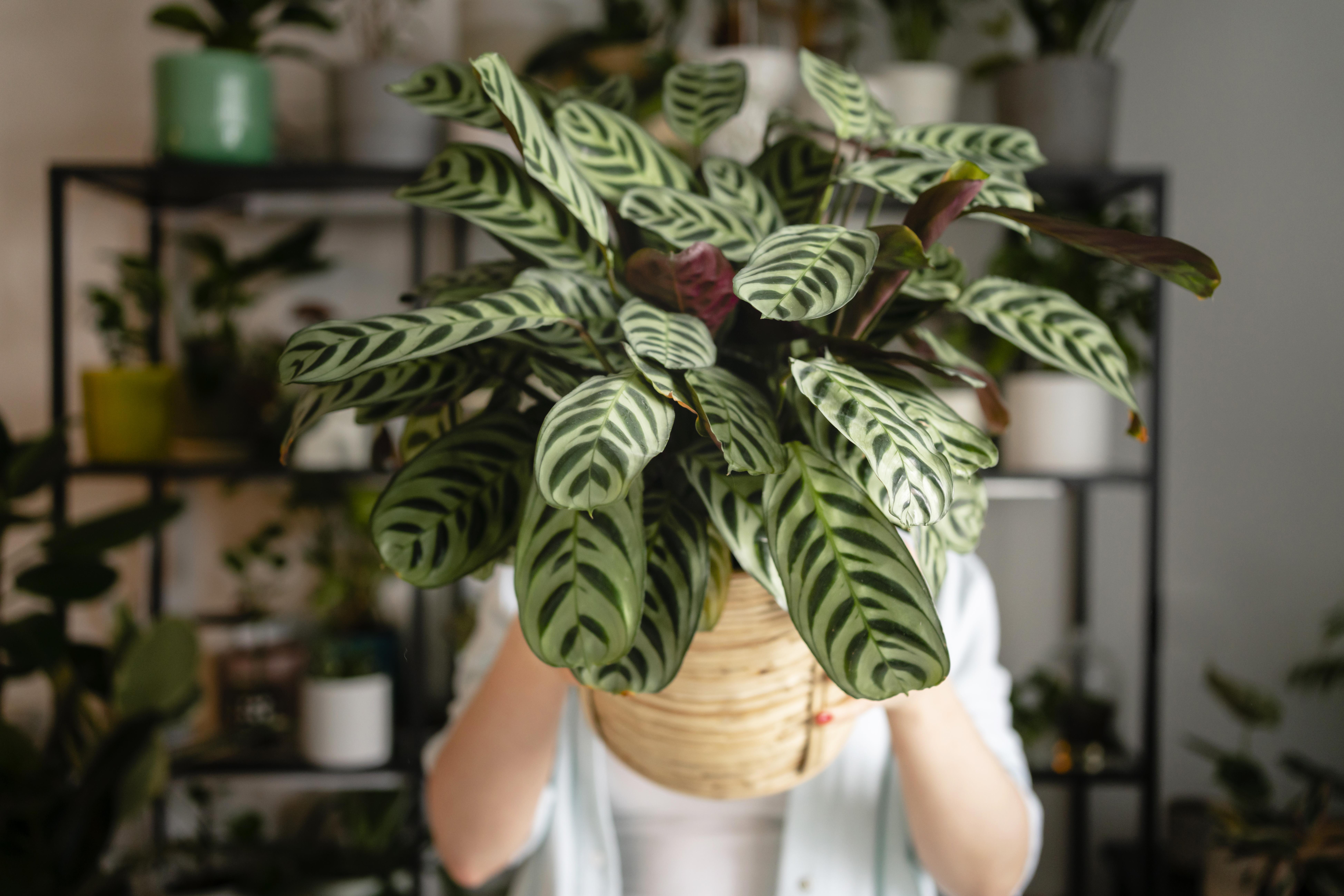
The common name Maranta Red Prayer comes from the leaf texture: the upper surface has a soft, velvety feel unlike almost any other houseplant. The leaves are dark green with a lighter green fishtail-shaped center pattern on top, and rich maroon-purple on the undersides. When the leaves fold upward at night, the purple undersides are on full display.
At Wild Potting Co., we carry Maranta Red Prayer when we can source healthy specimens with strong root systems. This is not a plant for everyone. It is a plant for someone who wants a genuine challenge and a genuine reward.
Care guide
Light: Bright indirect. No direct sun whatsoever.
Water: Keep soil consistently moist but never waterlogged. Use filtered or distilled water.
Humidity: 60%+ required. Will decline rapidly below 50%.
Temperature: 65-80F. No cold drafts.
Soil: Tropical mix: 2 parts coco coir, 1 part perlite, handful of worm castings.
Toxicity: Non-toxic to cats and dogs.
Growth Rate: Moderate during growing season. Slow in winter.
Detailed care
Light
Bright indirect light is ideal. East-facing windows work well. Keep away from south- and west-facing windows unless heavily filtered. Direct sun will bleach and burn the velvety leaves irreversibly.
Watering
Keep soil evenly moist but not soggy. Water when the top half inch begins to feel dry. Use filtered, distilled, or rainwater.
Humidity
This is the make-or-break factor. Minimum 60% humidity, thrives at 70%+. A humidifier is the most effective solution.
Feeding
Feed monthly spring through early fall with balanced liquid fertilizer at half strength. Stop fertilizing October through February.
Repotting
Every one to two years in spring. Go up one pot size only.
Propagation
By division only, not cuttings. During spring repotting, separate at the root level.
Common Issues
Brown, crispy leaf edges: Humidity or water quality issue
Curling leaves: Underwatering or low humidity
Yellowing lower leaves: Overwatering or natural aging
Fading leaf pattern: Insufficient light
Spider mites: Common in dry conditions
Grows well with
Plants that share a trait: same family, similar care, or complementary aesthetics.