Easy to Moderate
Cebu Blue Pothos
Scientific Name
Epipremnum pinnatum 'Cebu Blue'
Family
Araceae
Native Region
Cebu Island, Philippines
Growth Rate
Moderate
Origin + Story
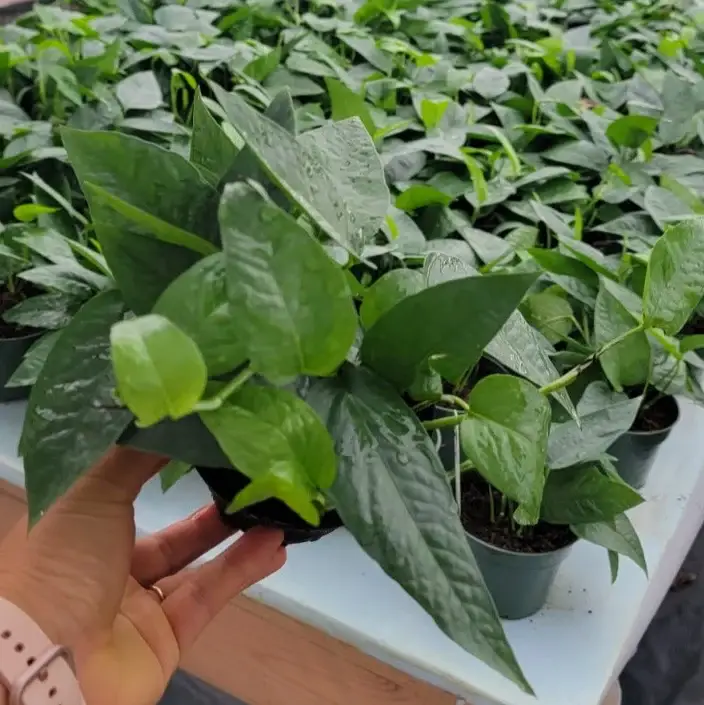
Cebu Blue is a naturally occurring form of Epipremnum pinnatum that originates from Cebu Island in the Philippines. The broader species is distributed widely across Southeast Asia, the Pacific Islands, and into northern Australia, where it grows as a climbing aroid in tropical and subtropical forests. It is a different species from Epipremnum aureum (the Golden Pothos and its cultivars), though both belong to the same genus.
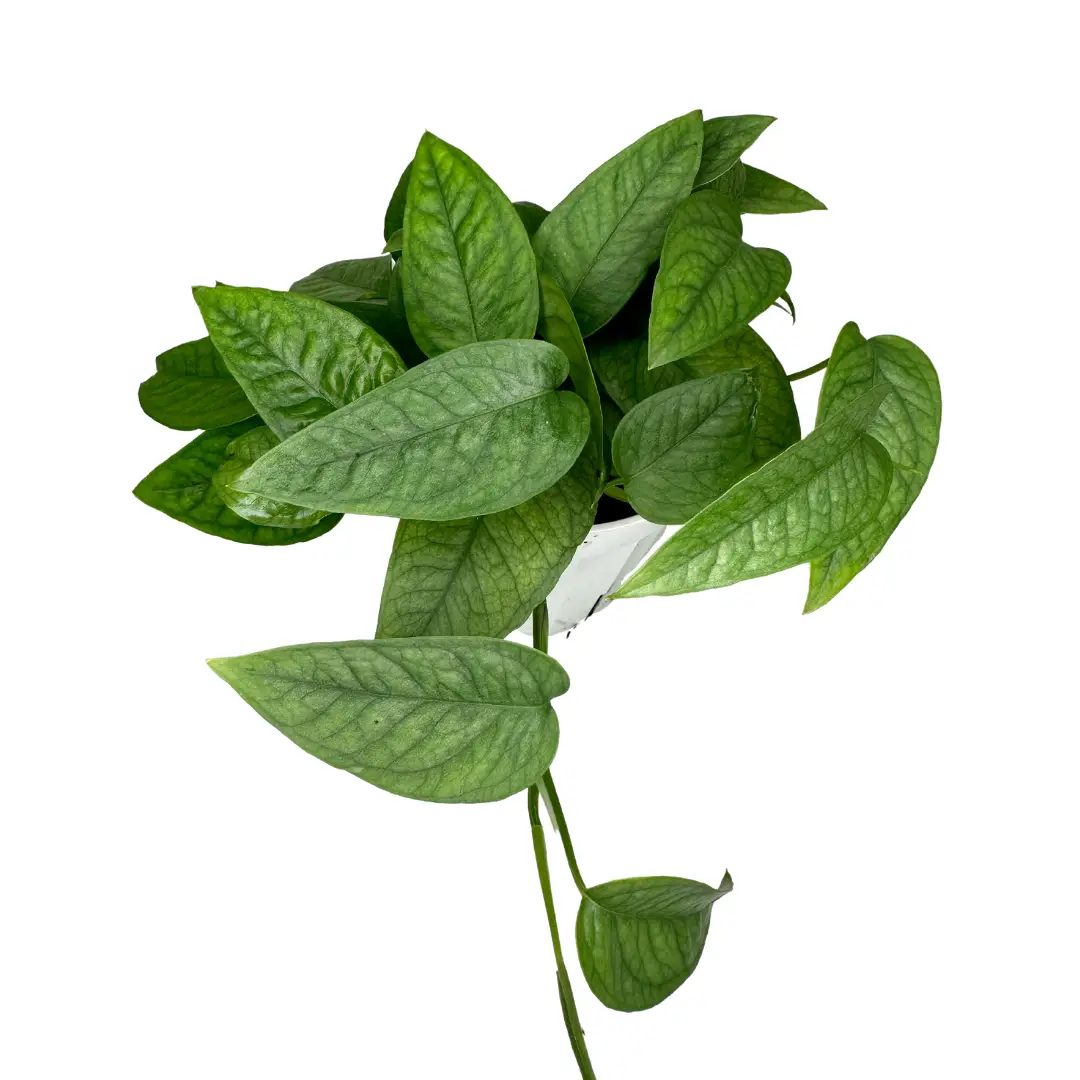
The Cebu Blue form is distinguished by its juvenile foliage: the leaves are elongated, narrow, and lance- or arrow-shaped with a distinctive silver-blue metallic sheen. This coloration comes from the way light interacts with the leaf's cellular structure rather than from pigmentation, which is why the blue shimmer is more pronounced in certain lighting conditions and nearly invisible in others. The texture is thin and papery compared to the thicker, waxier leaves of Epipremnum aureum varieties.
Here is where Cebu Blue gets especially interesting: it has a dramatic transformation from juvenile to mature form. In its juvenile trailing state, the leaves are small, narrow, and silvery blue. When given a vertical support to climb, the plant eventually transitions to mature growth with significantly larger leaves that develop fenestrations. Mature Epipremnum pinnatum leaves look almost nothing like their juvenile form. Achieving mature foliage indoors requires a very tall support, strong light, and patience measured in years, but it is one of the most rewarding long-term plant projects available.
The common name "pothos" connects it to the same casual family of easy trailing plants, but Cebu Blue occupies a slightly different niche. It is less ubiquitous, more visually distinctive, and offers a growth trajectory that the Epipremnum aureum cultivars do not.
Care guide
Light: Medium to bright indirect. Good light brings out the blue sheen.
Water: When top 1-2 inches of soil are dry.
Humidity: Appreciates 50-60%. Tolerates average home humidity.
Temperature: 60-85°F.
Soil: Aroid mix: potting soil, perlite, orchid bark.
Toxicity: Toxic to cats and dogs (calcium oxalate crystals).
Growth Rate: Moderate. Faster with a support to climb.
Detailed care
Light
Medium to bright indirect light. The silvery blue sheen is most visible in good light; in low light, the leaves tend to appear more green and the metallic quality fades. The plant survives in lower light but loses much of what makes it visually distinct. Bright indirect light also encourages the transition toward mature growth if the plant is climbing. Avoid prolonged direct sun, which can burn the thin leaves.
Watering
Water when the top one to two inches of soil are dry. Cebu Blue is slightly less drought-tolerant than Golden Pothos; the thinner leaves store less moisture, so extended dry spells will cause leaf curling and browning more quickly. In practice, it still falls in the easy category, just check a touch more often than you would with a Golden. Good drainage is important. Do not let the pot sit in water.
Humidity
Appreciates 50-60% humidity. Tolerates average home conditions without dramatic issues, but higher humidity improves leaf quality and growth rate. The thin leaves are more prone to crispy edges in very dry conditions than the waxy leaves of Epipremnum aureum. A humidifier or grouping with other plants helps during dry winter months.
Support and Mature Growth
This is the most exciting aspect of Cebu Blue. When allowed to climb a moss pole, trellis, or plank, the plant begins a transformation. The leaves gradually grow larger, wider, and darker. Eventually, if the support is tall enough and light is strong, the plant may begin producing fenestrated mature leaves. This transition can take one to three years or more depending on conditions.
The key factors for triggering mature growth are vertical climbing, strong bright indirect light, and time. A four- to six-foot moss pole is a good starting point. Keep the moss pole moist to encourage aerial root attachment. Even if the plant never reaches full mature fenestrated form indoors, the intermediate growth stages are beautiful in their own right. The journey is part of the appeal.
Feeding + Fertilizing
Feed monthly during the growing season with a balanced liquid fertilizer at half strength. If the plant is actively climbing and transitioning toward mature growth, consistent feeding supports the increased energy demand of producing larger leaves.
Repotting
Repot every one to two years in spring when roots fill the pot. Use a standard aroid mix with good drainage: potting soil, orchid bark, and perlite in roughly equal parts.
Propagation
Stem cuttings with at least one node, rooted in water or moist sphagnum moss. Slightly slower than Golden Pothos. Roots typically develop in two to three weeks in water. Cuttings from more mature growth may take slightly longer to root but can produce more vigorous plants.
Common Issues
Loss of blue sheen: Insufficient light. The metallic coloring depends on light quality and intensity. Move to a brighter spot.
Crispy leaf edges: Low humidity or underwatering. The thin leaves are less forgiving than Golden Pothos.
Yellowing leaves: Overwatering. Check soil moisture and drainage.
Leggy, sparse growth: Needs more light or a support to climb.
No fenestrations: This requires years of climbing in strong light. Be patient.
Aerial roots not attaching to pole: Try keeping the moss pole consistently moist.
Grows well with
Plants that share a trait: same family, similar care, or complementary aesthetics.