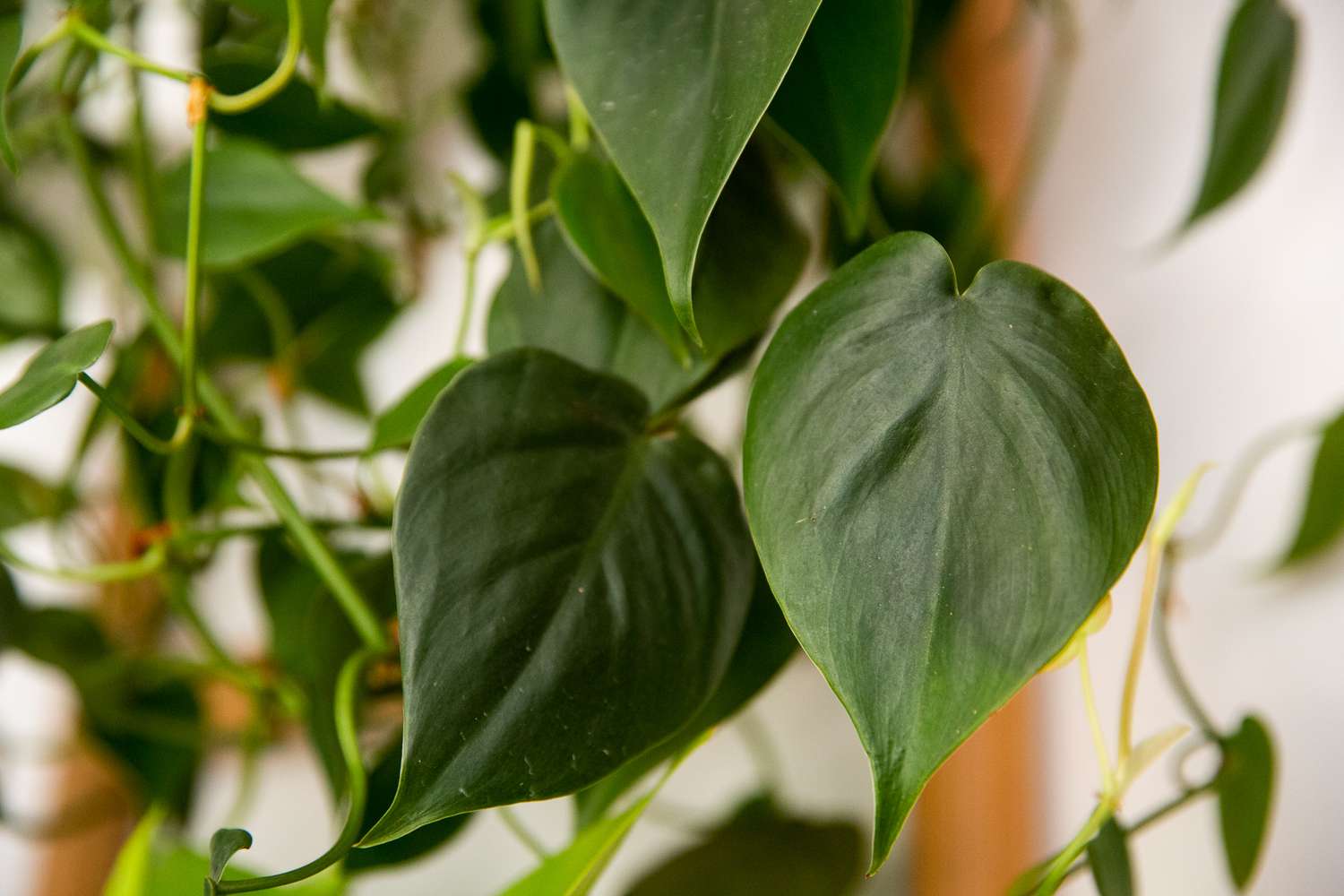
Easy
Heartleaf Philodendron
Scientific Name
Philodendron hederaceum
Family
Araceae
Native Region
Central America and the Caribbean
Growth Rate
Fast
Origin + Story
Philodendron hederaceum is one of the most widely grown houseplants in the world, and it has been since the Victorian era. It is native to Central America and the Caribbean, where it grows as a climbing epiphyte on tree trunks.
In the wild, heartleaf philodendrons climb toward the canopy using aerial roots. As the plant ascends and receives more light, its leaves grow progressively larger. The small leaves you see on a trailing shelf plant are the juvenile form. Given a moss pole, the leaves can reach six inches or more.
The classic green heartleaf is the species type, the original from which all the cultivated varieties were developed. It remains the most resilient and forgiving of the group.
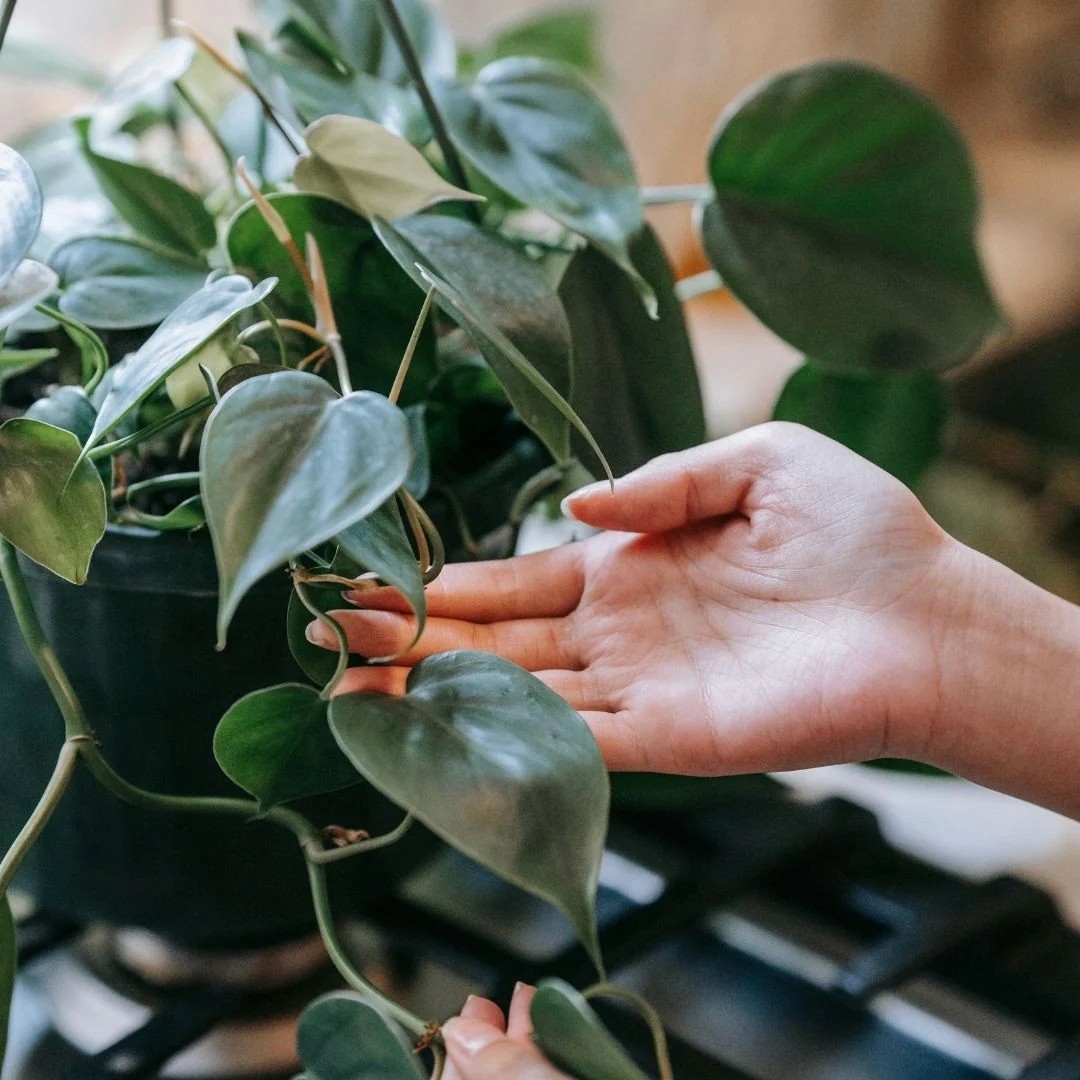
Care guide
Light: Low to bright indirect. Tolerates shade better than most.
Water: When top 1-2 inches of soil are dry. Forgiving of occasional neglect.
Humidity: Tolerates average home humidity. Appreciates 40-60%.
Temperature: 60-85F.
Soil: Standard aroid mix: equal parts potting soil, perlite, orchid bark.
Toxicity: Toxic to cats and dogs.
Growth Rate: Fast. Can grow several feet of vine per growing season.
Detailed care
Light
Adaptable to a wide range, from low light to bright indirect. For fullest growth, place in medium to bright indirect light.
Watering
Water when the top one to two inches feel dry. Droops when thirsty and bounces back quickly.
Propagation
One of the easiest to propagate. Cut below a node, place in water. Roots in one to three weeks.
Common Issues
Yellowing leaves: Overwatering
Leggy growth: Insufficient light
Small leaves: Provide a moss pole
Mealybugs: Check stem junctions
Grows well with
Plants that share a trait: same family, similar care, or complementary aesthetics.