
Easy to Moderate
Monstera Burle Marx
Scientific Name
Philodendron burle-marxii
Family
Araceae
Native Region
Tropical forests of Brazil
Growth Rate
Moderate
Origin + Story
A Monstera in name only. Everything else, its own thing.
Naming note. Despite the trade name, this is not a Monstera. It is a Philodendron, named for the Brazilian landscape architect Roberto Burle Marx. The 'Monstera' label stuck at retail decades ago and never went away. You'll also see 'Philodendron Burle Marx' and 'Monstera Burle Marx Flame' floating around; the Flame is a related but distinct cultivar with more elongated leaves.
Native to the tropical forests of Brazil. A climbing aroid that scrambles across the forest floor and up nearby trees. Named in honor of Roberto Burle Marx, whose gardens redefined how the world thinks about tropical landscape design.
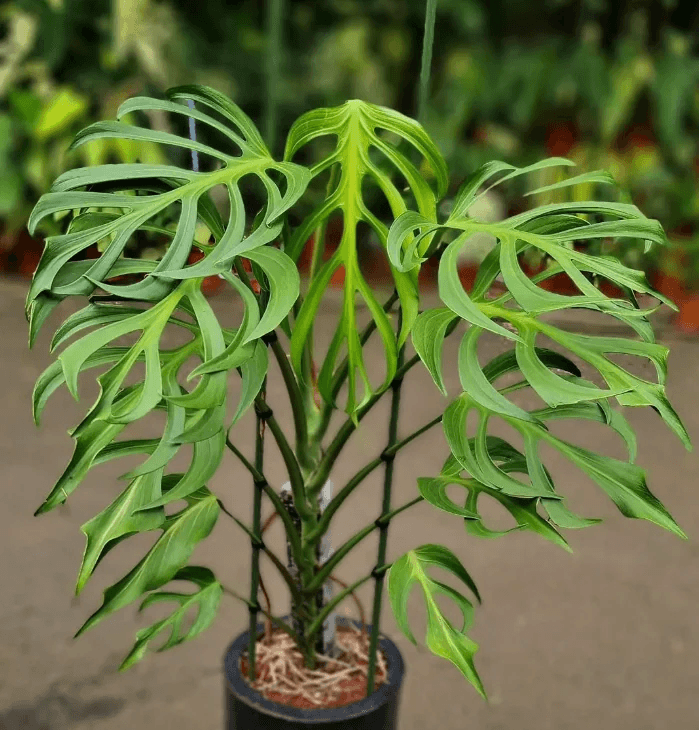
Deeply cut, arrow-shaped leaves in a soft matte green. The lobes give the plant a wild, almost prehistoric feel. Trails or climbs beautifully, and the leaves get larger and more sculptural with age.
Grows well with moss poles, dark planters, collectors of the lesser-known aroids, and anyone who values plants named after people who deserved it.
Care guide
Light: Bright indirect light. Tolerates medium.
Water: When the top inch of soil is dry.
Humidity: 50% and up.
Temperature: 65 to 80°F.
Soil: Chunky aroid mix. Bark, perlite, coco coir, a touch of charcoal.
Growth Rate: Moderate.
Detailed care
Light
Bright, indirect. Tolerates medium light but grows more slowly.
Water
Top inch dry, then water thoroughly. Don't let it dry out completely.
Humidity
50% or higher. Appreciates a humidifier, especially in winter.
Soil
Chunky aroid mix. Bark, perlite, coco coir, a touch of charcoal.
Feeding
Balanced fertilizer monthly during spring and summer.
Support
Loves a moss pole or trellis. Climbing habit produces larger, more mature leaves.
Common Issues
Yellowing leaves: Usually overwatering.
Small or misshapen leaves: Not enough light or support to climb.
Leggy vines: Reaching for light. Move brighter or trim to encourage branching.
Grows well with
Plants that share a trait: same family, similar care, or complementary aesthetics.