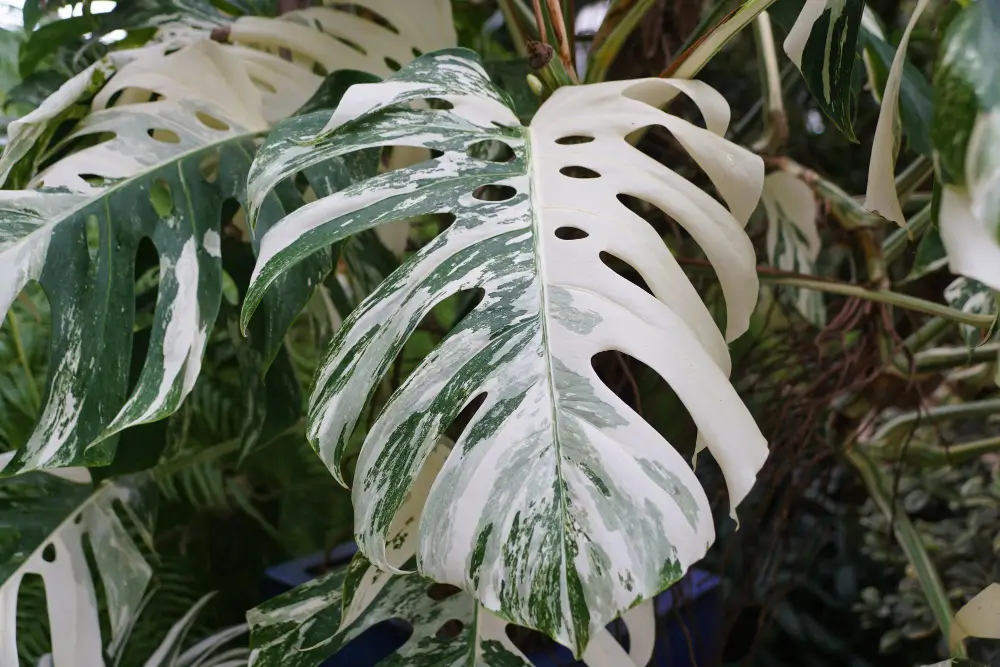
Collector's Challenge
Monstera Deliciosa 'Albo Variegata'
Scientific Name
Monstera deliciosa 'Albo Variegata'
Family
Araceae
Native Region
Tropical rainforests of southern Mexico and Central America
Growth Rate
Slow
Origin + Story
Unstable. Unrepeatable. Worth the wait.
Naming note. Often called simply 'Monstera Albo' or 'Albo Variegata.' This is a naturally occurring chimeric variegation, meaning the white tissue is the result of a genetic mutation that exists alongside the standard green tissue in the same plant. Because of this, no two Albos look alike, and the plant can revert to all-green or push out all-white leaves at any time. This is what makes it different from the lab-stabilized Thai Constellation. Same species, opposite stories.
The species is native to the tropical rainforests of southern Mexico and Central America. The Albo variegation itself is a spontaneous mutation that was identified and propagated by cutting, which is why every Albo in the world today is genetically linked through vegetative propagation. There are no Albo seeds in the traditional sense. Each plant is a clone of a clone of the original mutation.
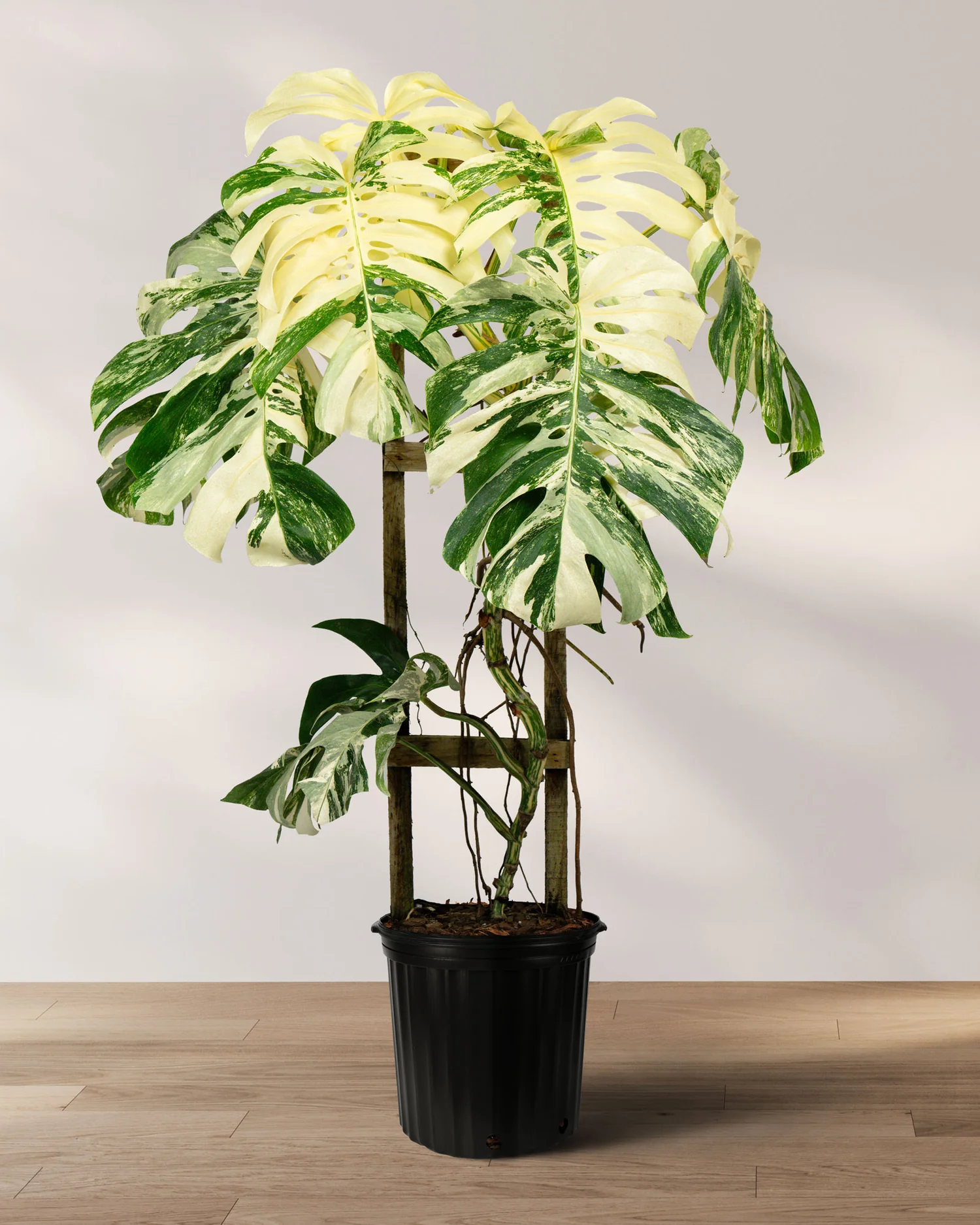
Large, deeply fenestrated leaves splashed with pure white in sectoral patterns: half-moons, full sections, sometimes entire leaves. The white is brilliant and chalky, with no yellow undertone. No two leaves match. No two plants match. Each one is its own composition. Grows well with moss poles, premium collector shelves, advanced plant keepers, and anyone who understands that some plants are worth the patience and the risk.
Care guide
Light: Bright indirect light. Brighter than Thai Constellation.
Water: When the top inch is dry. Drainage is critical.
Humidity: 60% and up.
Temperature: 65 to 80°F.
Soil: Chunky aroid mix with excellent drainage. Bark-heavy blends are best.
Growth Rate: Slow. Unpredictable variegation patterns.
Detailed care
Light
Bright, indirect. The pure white sections contain zero chlorophyll, which means the plant needs ample light to support the green portions doing all the photosynthetic work.
Watering
Water when the top inch is dry. The white sections are more susceptible to rot, so drainage and airflow matter even more here.
Humidity
60% or higher. The variegated tissue is more fragile and dries out faster.
Soil
Chunky aroid mix with excellent drainage. Bark-heavy blends are best.
Feeding
Diluted balanced fertilizer monthly in spring and summer. Less is more.
Pruning
If the plant pushes out a fully white leaf, leave it on as long as possible but know it will not last (no chlorophyll, no energy production). If it pushes out a fully green leaf, you have two choices: cut back to a variegated node to encourage variegated regrowth, or let it grow for the foliage mass. Either is valid.
Propagation
Cuttings must include a node with visible variegation. Cuttings from all-green sections will produce all-green plants.
Common Issues
Browning white sections: Sun damage, low humidity, or natural fragility. The white tissue is the first to suffer in any stressful condition.
Reverting to all-green: A natural risk with chimeric variegation. Prune back to the last variegated node to redirect growth.
All-white leaves: Dramatic and beautiful, but cannot photosynthesize. They will eventually decline. Some collectors choose to remove them to redirect energy; others let them have their moment.
Yellowing on green sections: Almost always overwatering.
Stalled growth: Often a sign of root issues. Check the root system before assuming light or feeding is the problem.
Grows well with
Plants that share a trait: same family, similar care, or complementary aesthetics.