Collector's Challenge
Monstera Deliciosa 'Thai Constellation'
Scientific Name
Monstera deliciosa 'Thai Constellation'
Family
Araceae
Native Region
Tropical rainforests of southern Mexico and Central America (cultivar developed in Thailand)
Growth Rate
Slow
Origin + Story
Stable variegation, slow magic.
Naming note. Often shortened to 'Thai Con' at retail and in collector circles. A tissue-cultured cultivar originally developed in a Thai laboratory, which is where the name comes from. Its variegation is stable, meaning it does not revert to solid green the way naturally variegated forms can. This is the key difference between Thai Constellation and Monstera Deliciosa Albo Variegata. Same species, very different stories.
The species is native to the tropical rainforests of southern Mexico and Central America, where it climbs trees using aerial roots. The 'Thai Constellation' cultivar itself was developed through tissue culture in Thailand and entered the houseplant market in the early 2000s. Every Thai Con in existence traces back to that original lab work.
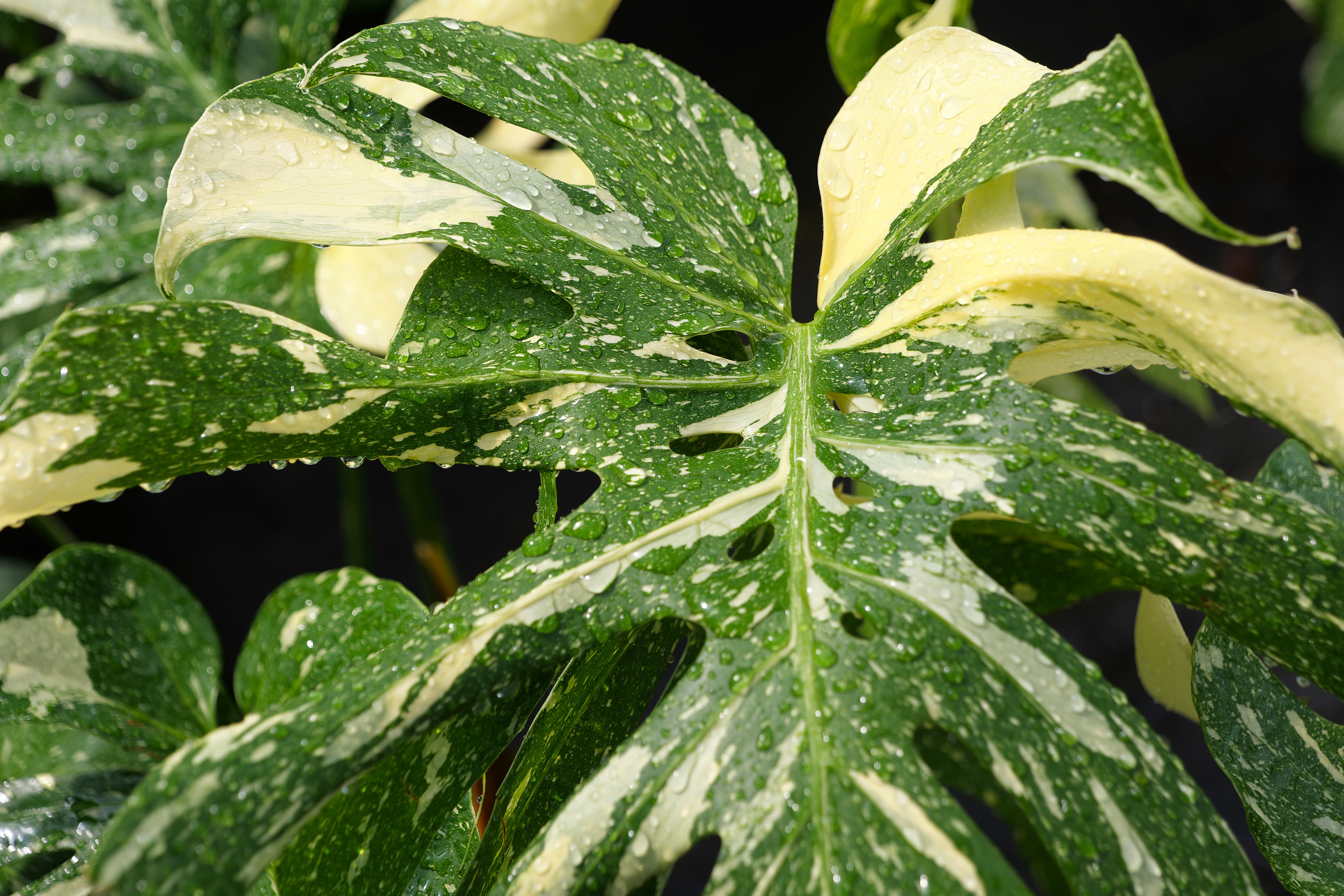
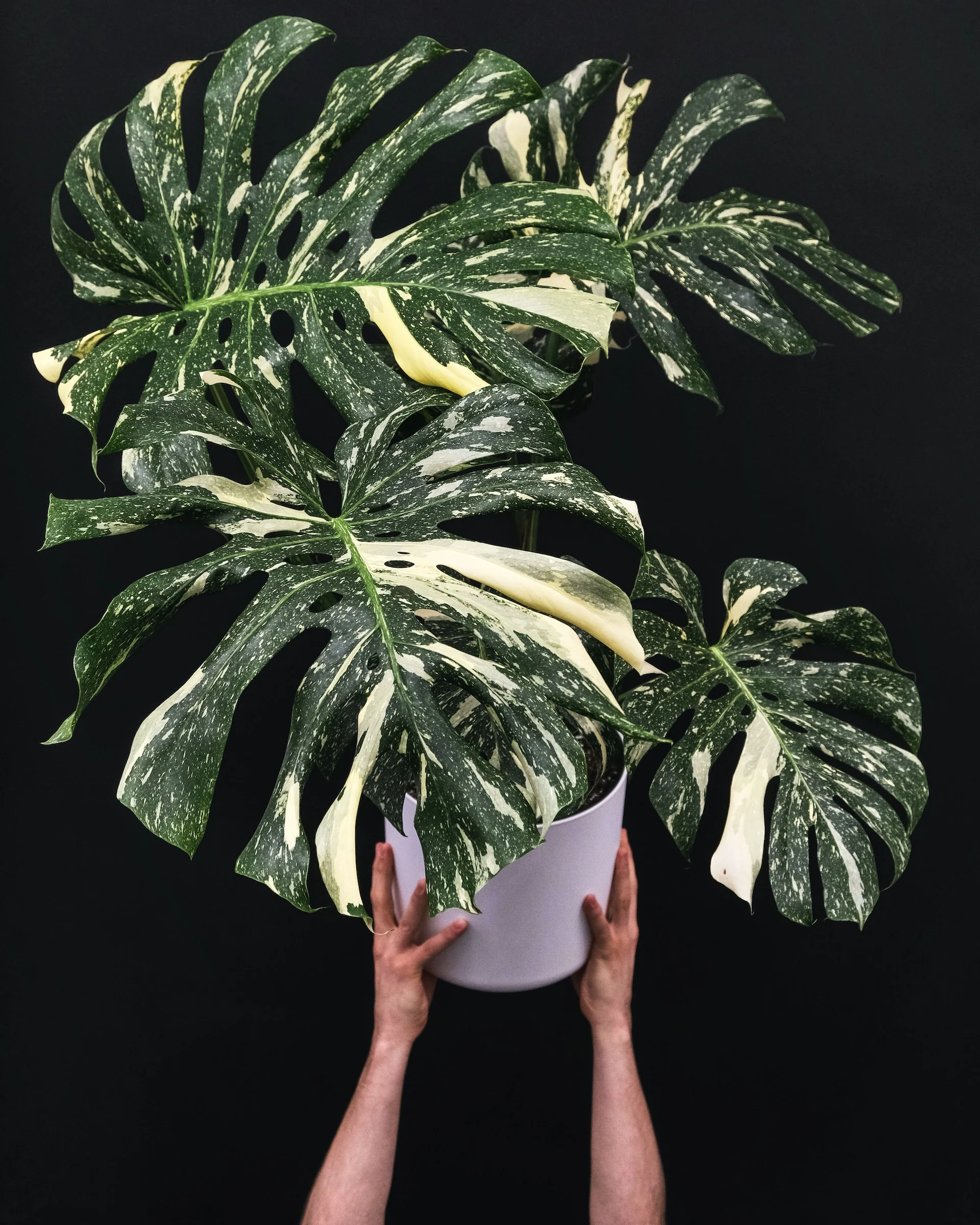
Large, deeply fenestrated leaves with creamy yellow speckling scattered across deep green, like a galaxy printed on each leaf. No two leaves are identical. The pattern is fine, dusted, and remarkably consistent across the plant, which is the gift of tissue culture stability. Grows well with moss poles, bright collector corners, alongside other premium aroids, and anyone willing to slow down and watch a plant unfold.
Care guide
Light: Bright indirect light. More than a standard deliciosa needs.
Water: When the top 1 to 2 inches are dry.
Humidity: 60% and up for the best growth.
Temperature: 65 to 80°F. Avoid drafts.
Soil: Chunky aroid mix. Orchid bark, perlite, coco coir, and a touch of charcoal.
Growth Rate: Slow. 1 to 2 new leaves per month at peak season.
Detailed care
Light
Bright, indirect. The variegated, cream-speckled portions of the leaf contain no chlorophyll, which means the plant photosynthesizes with less working surface area. More light helps compensate.
Watering
Water thoroughly when the top 1 to 2 inches are dry. Don't let it sit wet, don't let it bone-dry. Consistency matters.
Humidity
60% or higher produces the best leaf development and the cleanest variegation patterns.
Soil
Chunky aroid mix. Orchid bark, perlite, coco coir, and a touch of charcoal.
Feeding
Balanced fertilizer monthly during spring and summer, slightly diluted. Thai Cons grow more slowly than non-variegated forms and don't need heavy feeding.
Support
A moss pole encourages larger, more fenestrated leaves as the plant matures.
Patience
Growth is slower than the standard deliciosa. This is normal. The variegation is the trade-off.
Common Issues
Browning on cream sections: The variegated tissue is fragile and burns easily. Pull back from direct sun and check humidity.
All-green leaves: Thai Constellation does not revert in the traditional sense, but newer leaves can come in with less variegation if the light is too low. More light, more consistent care.
Yellowing: Almost always overwatering. The variegated form is even less forgiving of soggy soil than the standard.
Slow growth: Normal. If conditions are right, expect 1 to 2 new leaves per month at peak season.
Grows well with
Plants that share a trait: same family, similar care, or complementary aesthetics.