Collector's Challenge
Monstera Lechleriana Albo
Scientific Name
Monstera lechleriana (variegated form)
Family
Araceae
Native Region
Central America through northern South America
Growth Rate
Slow to moderate
Origin + Story
Monstera lechleriana is a climbing aroid native to a broad range across Central and South America, from Costa Rica and Panama through Colombia, Ecuador, Peru, Venezuela, and into Bolivia. It grows as a hemiepiphyte in tropical forests, starting life on the ground before climbing tree trunks using aerial roots, much like its more famous relative Monstera deliciosa. The species was described by the Austrian botanist Heinrich Wilhelm Schott in 1857 and named after the German pharmacist and plant explorer Willibald Lechler.
In the wild, Monstera lechleriana produces large, elongated, lance-shaped leaves that develop oval fenestrations along the midrib as the plant matures. Unlike Monstera deliciosa, whose mature leaves develop splits from the leaf edge inward as well as interior holes, lechleriana's fenestrations tend to be confined to the interior of the leaf and are elongated rather than round. The mature leaf shape is more streamlined and elegant than deliciosa's broad, split silhouette.
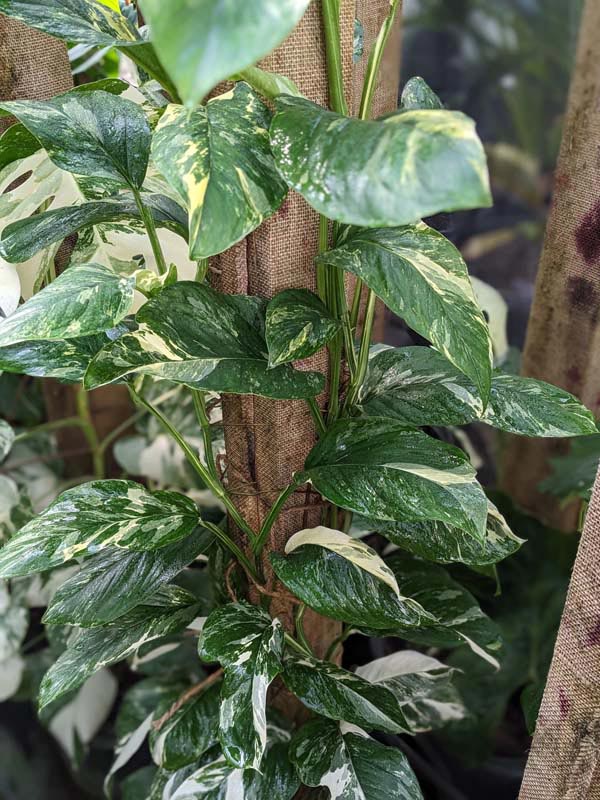
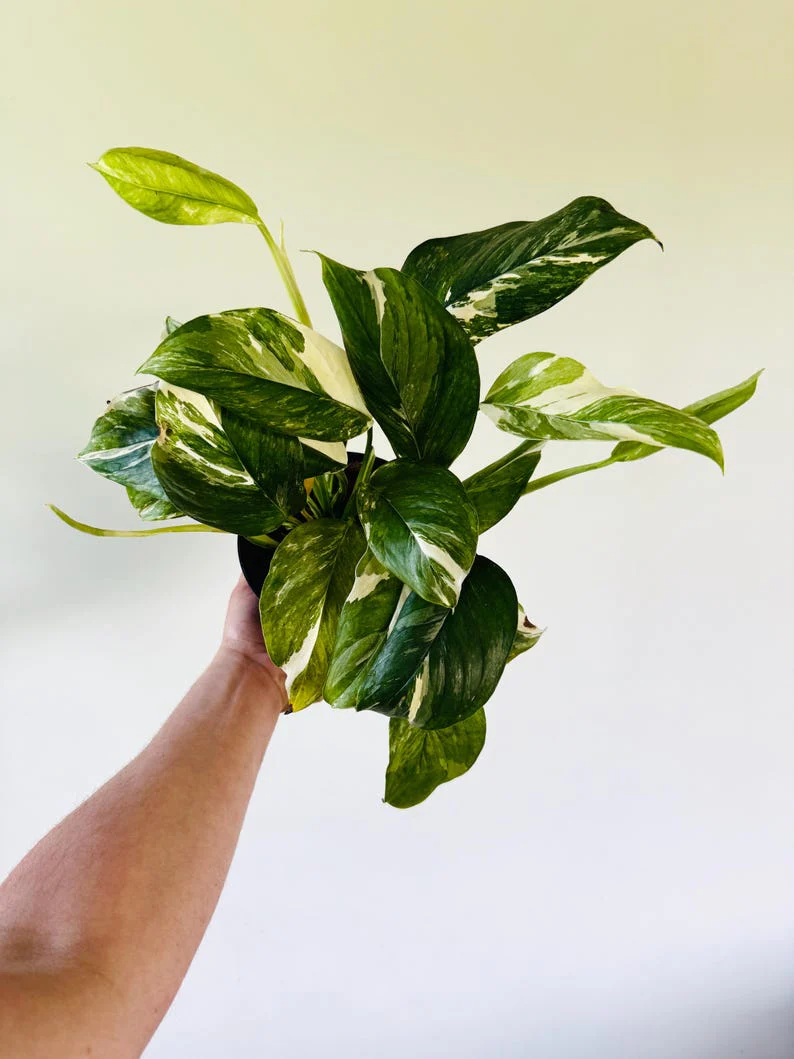
The Albo form refers to variegated specimens that produce sections of white alongside the normal green tissue. This variegation is caused by a chimeral mutation, meaning it is carried in only some of the plant's cell layers. As a result, the variegation is inherently unstable. New leaves may emerge with generous white sectors, minimal variegation, or none at all. Half-moon leaves are the most prized. Fully white leaves are striking but ultimately unsustainable for the plant since they cannot photosynthesize.
Lechleriana Albo offers a different aesthetic to the more famous Monstera Albo Borsigiana: the longer leaf shape and elongated fenestrations combined with the white variegation create a look that is more angular and architectural than the round, split leaves of a variegated deliciosa.
Care guide
Light: Bright indirect. Essential for maintaining variegation.
Water: When top 2 inches of soil are dry.
Humidity: Prefers 60%+. Tolerates 50% with good care.
Temperature: 65-85°F. Avoid cold drafts and temps below 55°F.
Soil: Chunky aroid mix: orchid bark, perlite, potting soil, horticultural charcoal.
Toxicity: Toxic to cats and dogs (calcium oxalate crystals).
Growth Rate: Slow to moderate. Variegated forms grow slower than the all-green species.
Detailed care
Light
Bright indirect light is critical, and more so for the Albo form than for the all-green species. The white sections of the leaves have no chlorophyll and produce no energy for the plant. The green portions must compensate, meaning they need abundant light to photosynthesize at a rate that supports the entire plant. In insufficient light, the plant may respond by producing more green-dominant leaves to survive, effectively reducing the variegation. A spot near an east- or south-facing window with filtered light is ideal. Some gentle direct morning sun can be beneficial but avoid harsh afternoon sun, which will burn the white leaf tissue quickly.
Watering
Water when the top two inches of soil feel dry. Monstera lechleriana prefers soil that is consistently lightly moist in the root zone but never waterlogged. The chunky aroid mix recommended for this plant helps: it holds some moisture in the bark and coir while the perlite and charcoal keep things aerated. In winter, reduce frequency as the plant slows. Variegated plants are generally more susceptible to root rot than their all-green counterparts because they have less energy to fight off infection, so err slightly toward drier rather than wetter.
Humidity
Prefers 60% or higher. At home, 50% is workable but the plant will look and grow noticeably better at 60%+. Brown edges on the white variegated sections are often the first sign that humidity is too low. A humidifier is the most reliable solution. If the plant is climbing a moss pole, keeping the pole moist also helps boost local humidity around the aerial roots.
Support
Like all Monstera species, lechleriana is a natural climber and produces significantly larger, more fenestrated leaves when given vertical support. A sturdy moss pole or coco coir pole is strongly recommended. The aerial roots will grip the pole and draw moisture from it, encouraging faster growth and more impressive leaf development. Without support, the plant will trail or sprawl with smaller leaves and fewer fenestrations.
Feeding + Fertilizing
Feed monthly during the growing season with a balanced liquid fertilizer at half strength. Some growers supplement with a diluted calcium and magnesium additive to support the additional demands of variegated tissue. Stop fertilizing in winter. Flush the soil with plain water every two to three months to prevent mineral buildup.
Repotting
Repot in spring when roots fill the current pot or begin growing through drainage holes. Go up one pot size. Use a very chunky aroid mix: roughly equal parts orchid bark, perlite, and potting soil, with a handful of horticultural charcoal. A terracotta or unglazed clay pot helps with drainage and breathability.
Propagation
Stem cuttings with at least one node and ideally one aerial root. When taking cuttings from a variegated plant, select a section that shows balanced variegation. A cutting from an all-green section will likely produce all-green growth going forward. An all-white cutting will fail because it has no chlorophyll to sustain itself. Root cuttings in moist sphagnum moss or perlite rather than water for better root quality. Rooting takes two to six weeks.
Managing Variegation
The chimeral variegation is not guaranteed on every new leaf. If the plant begins producing consistently all-green leaves, it may be reverting. Increase light first. If reversion continues, prune back to the last node that produced a well-variegated leaf. Conversely, if the plant produces multiple all-white or heavily white leaves, it is at risk of declining. Prune back to a node with more balanced variegation to redirect growth.
Common Issues
Brown edges on white sections: The white tissue is fragile and prone to browning from low humidity, direct sun, physical damage, or even normal aging. Minimize with high humidity and careful placement.
Loss of variegation (reverting): Usually a light issue. Increase brightness. Prune reverted growth back to the last variegated node.
Excessive white (too much variegation): The plant cannot sustain itself. Prune back to a more balanced node. Increase light.
Slow growth: Normal for variegated forms. Less chlorophyll means less energy. Be patient.
Yellowing leaves: Overwatering or root issues. Check soil moisture and root health.
No fenestrations: The plant needs more light and a support to climb.
Root rot: Variegated plants are more vulnerable. Use chunky, fast-draining soil and avoid overwatering.
Grows well with
Plants that share a trait: same family, similar care, or complementary aesthetics.